"Amazon, Amazon Prime, the Amazon logo and Amazon Prime logo are trademarks of Amazon.com, Inc. or its affiliates". Advertising Disclosure
BestChoice.guide ratings are based on a multitude of verified customer feedback and our attention is solely on products that we truly value. If you choose to click on the links to the products we mention, we could receive an affiliate commission, but this will not cause you any additional costs.
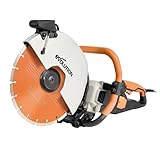
A Clean Wet Cut: The VEVOR electric concrete saw offers a better cutting experience and reduces lung damage by preventing debris from spreading during cutting operations. It also includes a wet-cutting attachment, which provides direct water spraying and eliminates the need for one-handed watering while cutting. This improves operational security and makes cutting easier.
Cut with Ease: The concrete saw cutter is powered by a strong 3200 W motor that runs at a fast speed of 3600 rpm. This results in efficient slotting and fast, flat, and stable cutting. The pure copper motor is also heat-proof and designed to never burn out.
Peace of Mind: The double switch helps avoid accidental activation of the concrete saw when it's not in use, reducing the risk of injury. The machine also features slow start, overload protection, and built-in GFCI design, all of which ensure smoother and safer operation, as well as a longer lifespan.
All in One Convenience: The concrete cutter comes with a wheeled base that doubles as a cutting and positioning device, making it easier to create precise grooves with less effort. It also features a generously sized handle that's ergonomically designed for a comfortable grip during long work hours.
Cut through Anything: Our concrete cutter saw has a cutting depth of 6 inches, making it suitable for cutting through various concrete materials such as stones, reinforced concrete, pavings, and bricks.
LIGHTWEIGHT & POWERFUL - The circular saw is lightweight and powerful machine with superior power-to-weight ratio with exceptionally low vibrations mean less strain and maximized productivity. This cutter is thoughtfully designed with a D-shaped ergonomic handle that provides a secure, comfortable grip for better control during precise or prolonged cutting tasks
DOUBLE PROTECTION SWITCH - The double protection switch prevents the machine from accidentally opening, promises a safer cutting job. Designed with user protection in mind, this concrete saw features a dual-switch safety system that helps prevent accidental startups. Both the power trigger and the safety lock switch must be engaged simultaneously to activate the machine, significantly reducing the risk of unintended operation
USED WET OR DRY - The dual integrated dust management system takes the dust out of the job; For wet cuts, build-in water feed attachment and control the flow with the convenient valve, water line feeds water to the blade decreasing dust and increasing blade performance and life. The tool also comes standard with GFCI built-in the cord.
EXTRACTION DUST PORT - Able to vent the cutting debris timely, help you clear the cutting surface, for you to keep the cutting line free of dust all the time, and also give you a clear view of the cutting line. With the metal guard design to prevent the hurt from spark when operating
POWERFUL MOTOR - Engineered with a robust 3200W motor, this cutter delivers a no-load speed of up to 4,700 RPM, providing the power and efficiency needed for demanding jobs. Whether working with concrete, large stone blocks, or cement-based materials, the motor maintains consistent speed, ensuring smooth and accurate cuts without stalls or slowdowns
Powerful 20A Electric Concrete Saw – High-torque motor delivers gas-like cutting performance with no fuel, oil, or maintenance, ideal for heavy-duty concrete and masonry cutting. Active overload protection provides real-time feedback to optimize performance and extend tool life.
Deep 5-1/8” Cut with 14” Diamond Blade – Premium blade with 35% more diamond ensures faster, longer-lasting cuts on concrete, brick, and stone. Fitted with a heavy-duty 20A plug; requires a 20A outlet (not compatible with 15A outlets).
Auto ON/OFF Dust Suppression System – Integrated water control minimizes dust for OSHA-compliant cutting, perfect for indoor and outdoor job sites. Set up once, and the tool automatically manages dust, saving time and water.
Heavy-Duty & Durable Design – Steel skid plate, cast aluminum casing, dust-sealed switches, and brass water inlet for long-lasting performance in tough job site conditions.
Versatile & Ergonomic Cutting with 3-Year Warranty – 5-position rotating blade guard, wraparound handle, and wheeled skid plate provide precision for horizontal and vertical cuts. Backed by Evolution's 3-year warranty, ensuring long-lasting reliability and performance.
Concrete saws, essential tools in construction and renovation projects, are designed for cutting concrete, asphalt, brick, and other masonry materials. Whether you’re installing a new driveway, creating openings for windows and doors, or undertaking road repair work, a concrete saw can offer the precision and power needed for efficient and effective cutting. Available in various types, including walk-behind saws, handheld saws, and cut-off machines, selecting the right concrete saw involves considering the cutting depth, power source, blade type, and specific features that match your project requirements. This guide will outline the key features and considerations to help you choose the best concrete saw for your needs.
Key Features to Consider
Cutting Depth and Power
Cutting Depth: Determined by the blade diameter and saw type. Ensure the saw can reach the necessary depth for your projects.
Power Source: Concrete saws can be powered by electricity, gasoline, hydraulic or pneumatic systems. Electric models are quieter and emission-free for indoor use, while gasoline models offer higher power and mobility for outdoor applications.
Blade Type
Diamond Blades: The most common and effective type for cutting concrete, available in various specifications tailored to different materials and cutting conditions.
Abrasive Blades: An alternative for cutting softer masonry or for users on a budget, though they wear down faster than diamond blades.
Saw Type
Handheld Saws: Offer portability and flexibility for smaller projects or tight spaces. Available in both electric and gasoline-powered models.
Walk-Behind Saws: Ideal for larger projects requiring long, straight cuts, like road repairs or large flooring sections. They offer more power and deeper cutting capabilities.
Ergonomics and Safety Features
Vibration Reduction: Essential for handheld models to reduce fatigue and increase control during extended use.
Water Attachment: Helps suppress dust and cool the blade, extending its lifespan and improving cutting efficiency while reducing health hazards associated with silica dust.
Additional Features
Adjustable Cutting Depth: Allows for precise control over the depth of the cut, essential for avoiding underground utilities or creating uniform grooves.
Portability: Consider the weight and size of the saw, especially for handheld models or if the saw needs to be transported frequently between job sites.
Pros and Cons
Pros of Concrete Saws
Cons of Concrete Saws
⚡ Capable of cutting through hard materials precisely and efficiently
💸 High-quality saws and blades can be a significant investment
🛠️ Versatile applications, from small residential projects to large commercial constructions
🔊 Gasoline-powered models can be loud and produce emissions
🎨 Various models available to suit different needs and preferences
🏋️♂️ Some models, especially walk-behind saws, can be heavy and require more storage space
💧 Water attachment necessary for dust suppression may not be included with all models
Quick Tips
1️⃣ Assess Your Project Requirements: Consider the size and scope of your projects to determine the most appropriate saw type and power source. 2️⃣ Blade Compatibility: Ensure the saw can accommodate the type of blade best suited for the materials you plan to cut. 3️⃣ Consider Operational Costs: Beyond the initial purchase, factor in the cost of replacement blades, fuel, and maintenance.
Choosing the best concrete saw requires careful consideration of your specific project needs, including the materials you’ll be cutting, the desired cutting depth, and the preferred power source. By selecting a saw with the right combination of power, blade type, and ergonomics, you can tackle concrete cutting tasks more effectively and safely. Remember to prioritize models with essential safety features and consider the long-term costs of blades and maintenance. Investing in a high-quality concrete saw can significantly enhance your efficiency on construction and renovation projects, providing reliable performance for years to come.