TOP PICKS
Bestseller No. 1
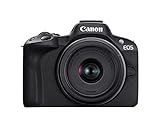
Canon EOS R50 Mirrorless Camera RF-S18-45mm F4.5-6.3 is STM Lens Kit
- High Image Quality: Canon EOS R50 4K digital camera features a 24.2 Megapixel CMOS (APS-C) sensor and DIGIC X processor for stunning image clarity and level of detail
- High-Speed Continuous Shooting: Capture fast action with up to 12 fps with Electronic First Curtain shutter and up tp 15 fps with Electronic Shutter for a superior vlogging camera
- Advanced Auto Focus: Dual Pixel CMOS AF II covers up to 100% x 100% area with 651 AF zones; features auto subject detection and tracking of people, animals, and vehicles using deep learning technology — perfect 4K camera for video recording
- Exceptional Low-Light Performance: Advanced A+ Assist offers an expanded array of auto-compatible scenes for greater expressive capability in auto mode and enables great imagery even in difficult settings such as night and backlit scenarios.
- Fluid Video Capture: Video recording features such as 6K oversampled uncropped 4K movie at up to 30 fps, Full-HD High-frame rate movie recording at up to 120 fps: Movie for Close-up Demo Mode quickly and automatically switches focus to the subject closest to the camera
SaleBestseller No. 2 −11%
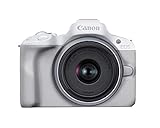
Canon EOS R50 Mirrorless Camera RF-S18-45mm F4.5-6.3 is STM Lens Kit
- High Image Quality: Canon EOS R50 4K digital camera features a 24.2 Megapixel CMOS (APS-C) sensor and DIGIC X processor for stunning image clarity and level of detail
- High-Speed Continuous Shooting: Capture fast action with up to 12 fps with Electronic First Curtain shutter and up tp 15 fps with Electronic Shutter for a superior vlogging camera
- Advanced Auto Focus: Dual Pixel CMOS AF II covers up to 100% x 100% area with 651 AF zones; features auto subject detection and tracking of people, animals, and vehicles using deep learning technology — perfect 4K camera for video recording
- Exceptional Low-Light Performance: Advanced A+ Assist offers an expanded array of auto-compatible scenes for greater expressive capability in auto mode and enables great imagery even in difficult settings such as night and backlit scenarios.
- Fluid Video Capture: Video recording features such as 6K oversampled uncropped 4K movie at up to 30 fps, Full-HD High-frame rate movie recording at up to 120 fps: Movie for Close-up Demo Mode quickly and automatically switches focus to the subject closest to the camera
Bestseller No. 3
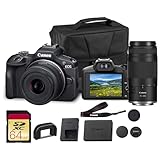
Canon EOS R100 Mirrorless Camera with 18-45mm & 75-300mm Double Lens Bundle
- Capture every perspective with the Canon EOS R100 mirrorless camera kit, featuring two versatile lenses — the RF-S 18-45mm f/4.5-6.3 IS STM for wide-angle to standard shots and the RF 75-300mm f/4-5.6 telephoto lens for long-distance subjects. This combination gives beginners and enthusiasts a complete setup for landscapes, portraits, travel, sports, and wildlife.
- High-Resolution Imaging with APS-C Sensor - Equipped with a 24.2MP APS-C CMOS sensor and DIGIC 8 image processor, the EOS R100 delivers crisp, detailed images with beautiful color reproduction. The large sensor allows for impressive background blur, even in low light situations, enhancing portraits and artistic shots.
- Canon’s renowned Dual Pixel CMOS AF ensures accurate and responsive focusing across the frame, perfect for moving subjects. Eye Detection AF keeps your portraits sharp by automatically tracking your subject’s eyes, even during candid or fast-paced situations. This intelligent system makes photography more intuitive, reducing the chance of missed focus and allowing photographers of all levels to capture moments with confidence and ease.
- Weighing less than traditional DSLR systems, the EOS R100 is compact and easy to carry, making it perfect for travel, events, and daily use. Its comfortable grip and intuitive controls allow new photographers to get started quickly while offering flexibility for growth. Combined with the interchangeable RF lens system, the camera supports creative expansion for users ready to explore more advanced photography and videography, all while staying lightweight and portable.
Bestseller No. 5
Sony a5100 16-50mm Mirrorless Digital Camera with 3-Inch Flip Up LCD (White)
- Ultra-fast auto focus with 179 AF points and 6Fps, Video Format: MPEG-4 AVC/H.264
- Capture life in high resolution with 24MP APS-C sensor
- Instant sharing via smartphone with Wi-Fi and NFC1
- Record Full HD 1080/24/60P video3 up to 50MB/s. Operating temperature: Range 32°-104°F / 0-40°C
- We recommend charging the battery pack in an ambient temperature of between 10°C to 30°C(50ºF to 86ºF). AF Illuminator range-Approx. 0.3- approx. 3.0 m (with E PZ 16-50mm F3.5-5.6 OSS lens attached)
Bestseller No. 6

Sony a7 IV Mirrorless Digital Camera 33MP w/ 28-70mmmm Lens ILCE-7M4K/B, 128GB Memory.43 Wide & 2X Lenses, Case. Tripod, Filters, Hood, Spare Battery & Charger, Software Kit -Deluxe Bundle
- SONY USA AUTHORIZED - Includes Full SONY USA WARRANTY, Camera Package Includes Camera Body, Lens, Battery, Charger, Lens Cap, and Strap + Bundles Accessories
- Sony a7 IV Mirrorless Camera: 33MP Full-Frame Exmor R CMOS Sensor, Up to 10 fps Shooting, ISO 100-51200, 4K 60p Video in 10-Bit, S-Cinetone, 3.68m-Dot EVF with 120 fps Refresh Rate, 3" 1.03m-Dot Vari-Angle Touchscreen LCD, 759-Pt. Fast Hybrid AF, Real-time Eye AF, Focus Breathing Compensation, 5-Axis SteadyShot Image Stabilization, Creative Looks and Soft Skin Effect
- Sony FE 28-70mm f/3.5-5.6 OSS Lens: Combining impressive optical performance with lightweight, compact convenience, the 28-70mm Lens makes an ideal everyday lens. The popular 28–70 mm zoom range covers a variety of uses, from landscapes to portraits and snapshots. Built-in Optical SteadyShot image stabilization keeps images sharp and noise-free.
- Transcend 64GB 300S UHS-I SDXC Memory Card-64GB Storage Capacity, UHS-I / U1 / Class 10, Max Read Speed: 100 MB/s, Max Write Speed: 20 MB/s, Min Write Speed: 10 MB/s, Records Full HD Video and Still Photos, Water / Static / Shock / X-Ray Proof, Can Withstand Extreme Temperatures, Built-In Write-Protect Switch, Free RecoveRx Software
- Movavi Professional Video & Photo Editing Software Kit - Compatible with Windows and Mac Operating systems this 5 software package comes with premium softwares to fulfill your Photo/Video/Vlogging Editing needs
SaleBestseller No. 7 −16%
Sony Alpha a7 III Mirrorless Camera with 28-70mm Lens Black
- Advanced 24.2MP BSI Full-frame Image Sensor w/ 1.8X readout speed Advanced 24.2MP Back-Illuminated 35mm Full-frame Image Sensor
- 15-stop dynamic range, 14-bit uncompressed RAW, ISO 50 to 204,800
- Up to 10fps Silent or Mechanical Shutter with AE/AF tracking
- 693 phase-detection / 425 contrast AF points w/ 93% image coverage
- In the box: SEL2870 lens, Lens hood, Lens cap, Lens rear cap, Rechargeable Battery (NP-FZ100), AC Adapter (AC-UUD12), Shoulder strap, Body cap, Accessory shoe cap, Eyepiece cup, Micro USB cable
Bestseller No. 8
Sony Alpha a6000 Mirrorless Digital Camera 24.3MP SLR Camera with 3.0-Inch LCD (Black) w/16-50mm Power Zoom Lens
- Advanced 24.2MP back Illuminated 35 millimeter full frame image sensor
- ISO 100 25600 (expandable to 51200). Lens compatibility: Sony E mount lenses
- Hybrid AF with 179 point focal plane phase detection and 25 contrast detect points
- Up to 11 FPS continuous shooting. Battery Life (Still Images): Up to 360 shots. Metering type:1200-zone evaluative metering
- 3 inch tilting LCD with 921,000 dots. Viewfinder Type: 0.39 in type electronic viewfinder (color)
Bestseller No. 10
Canon EOS R50 Mirrorless Camera with 18-45mm Lens (5811C012) Bundle
- Great for Vloggers & Beginners: Lightweight and easy to use, the R50 is perfect for new creators who want great quality photos and 4K video without complexity.
- Includes Versatile 18–45mm Lens: Covering wide to standard focal lengths, this compact zoom lens is great for daily content, portraits, and street shooting.
- Oversampled 4K with Dual Pixel AF: Enjoy sharp, smooth footage with reliable subject tracking, face/eye detection, and autofocus built for creators.
- Creative Assist & Vertical Video: In-camera guides and social-ready tools like vertical shooting make it easy to create and share content on any platform.
BUYING GUIDES
Entering the world of digital photography as a beginner can be both exciting and overwhelming. With a vast range of digital cameras available in the market, knowing where to start can be challenging. This buying guide will assist you in selecting the best digital camera that matches your needs as a beginner.
1. Type of Camera: Start by deciding the type of camera you want. Compact point-and-shoot cameras are affordable, portable, and user-friendly – ideal for casual shooting. Advanced compact cameras offer greater control over settings. Mirrorless cameras are compact with interchangeable lenses, providing excellent image quality. DSLRs, with superb image quality and vast lens selection, can be bulkier and have a steeper learning curve.
2. Budget: As a beginner, there’s no need to spend thousands on your first camera. Many excellent entry-level cameras provide great value for their cost. Determine your budget first and then look for the best camera within that range.
3. Ease of Use: Look for a camera that is user-friendly. It should have intuitive controls and a well-organized menu system. Some cameras even have a “Guide Mode” that helps beginners understand different settings.
4. Sensor Size and Megapixels: Larger sensors generally deliver better image quality, especially in low light. For beginners, a camera with an APS-C size sensor is usually sufficient. As for megapixels, don’t get too caught up with higher numbers. Anything above 12 megapixels is enough for most beginners.
5. Lens Options: If you’re considering a DSLR or mirrorless camera, check the availability of lenses and their costs. Even if you start with a kit lens, knowing you can upgrade later is important.
6. Size and Weight: If you plan to carry your camera frequently, a lightweight and compact model might be more suitable. Remember, the best camera is the one you have with you.
7. Video Recording: If you’re interested in shooting videos, ensure the camera has decent video capabilities. Look for one that records at least in Full HD (1080p), though 4K would provide more detail.
8. Image Stabilization: This feature helps minimize blurriness from small hand movements. This can be particularly useful when shooting handheld or in low-light situations.
9. Battery Life: Nothing is worse than your camera dying in the middle of a day’s shooting. Make sure the camera has adequate battery life, and consider buying a spare battery.
10. Future Growth: While you are a beginner now, you will learn and grow with time. Consider a camera that offers more advanced features that you can use as your skills improve.
Always read reviews and, if possible, visit a store to try out the camera before buying. Consider what type of photography interests you (like landscapes, portraits, wildlife, etc.), as this can guide your choice. Remember, the goal is to learn and enjoy the process of photography. Happy shooting!