TOP PICKS
Bestseller No. 1

Rhymo Folding Piano Keyboard, 61 Keys Sensitive Electric Piano, Weighted Portable Electric Keyboards with Bluetooth MIDI, Digital Foldable Keyboard for Beginner (Black)
- 【Studio-Grade Audio Quality】Experience concert-hall resonance with our foldable piano's premium sound engine. The professional-grade audio technology reproduces 128-note polyphony and 128 built-in timbres, making this folding piano keyboard ideal for both practice sessions and stage performances.
- 【Full-Size Authenticity】With standard 61-key dimensions (90x19cm when unfolded), each 2.2cm-wide key on this travel piano replicates acoustic piano specifications. The weighted key action and spatial configuration follow professional standards, guaranteeing smooth progression from practice sessions to live performances.
- 【Ultra-Portable Design】Slim-profile folding piano (45x11x19cm/2.3kg) with included padded gig bag. Built for: Festive Getaways,Business Trips,Compact Apartments,Rail Commutes,Daily Practice.
- 【Hybrid Control Interface】This touch-sensitive folding piano combines slightly weighted keys and a dynamic response system to authentically replicate acoustic key resistance while maintaining portability. The integrated LCD screen provides real-time monitoring of chord progressions, sustain effects, metronome synchronization, and transposition parameters.
- 【10H Battery Life】This folding piano operates on an integrated lithium battery system, providing continuous cordless operation for up to 10 hours. The power management module supports simultaneous charging and playing via USB-C, with full recharge completed in 1.5 hours.
Bestseller No. 2

Alesis Recital Play 88-Key Piano Keyboard Bundle
- The Ultimate Practice Keyboard for Beginners - Portable, lightweight, and easy-to-use music keyboard with built-in speakers delivering rich sound for an authentic and inspiring playing experience
- 88 Keys to Success - The electric piano's 88 full-size, touch-sensitive, piano-style keys simulate an acoustic piano sound, ideal for all ages to build finger strength and dexterity
- Massive Sound Library - Enjoy 480 realistic sounds, easily adjustable reverb FX, one-touch song mode with 160 rhythms to create and record songs in many genres, and 140 built-in demo songs
- Educational Features - Including innovative Split, Lesson and Record Modes, so student and teacher can play together and record performances, a built-in metronome, and an easy transpose feature
- USB-MIDI Connection - Simply plug the Recital Play into a Mac or PC to utilize most recording and educational piano software, like the included premium lessons from Skoove and Melodics
SaleBestseller No. 3 −17%

Donner 88 Key Keyboard Piano for Beginners, Semi-Weighted Electric Digital Piano with 500 Tones, 128-Note Polyphony, USB MIDI, Speakers, Carry Bag, X-Stand, Pedal & Music Rest Included(DEP-07)
- Full Size 88-Key Touch-Sensitive Keyboard: Experience authentic piano response with 88 full-size touch-sensitive keys that react to your playing dynamics. The DEP-07 is designed to help develop proper finger control and expressive performance while delivering a realistic playing experience.
- Extensive Sound Library: Unlock endless creativity with an extensive collection of 500 tones, 200 rhythms, and 150 built-in demo songs. From piano practice and songwriting to live performance, enjoy a wide range of sounds and styles that inspire musical exploration and enhance every playing experience.
- Immersive Playing Experience: Designed to deliver responsive performance and consistent sound quality, the DEP-07 lets you play everything from simple melodies to more complex arrangements with confidence. Built-in dual 10W stereo speakers provide clear, room-filling sound for practice sessions, casual performances, and everyday enjoyment.
- Expand Your Musical Possibilities: Whether you're practicing privately, capturing new ideas, or connecting to music software, the DEP-07 adapts to your workflow. Flexible connectivity options make it easy to integrate with your setup and support learning, creativity, and performance as your skills grow.
- Complete Portable Piano: Featuring a slim 3.15-inch profile and lightweight design, the DEP-07 is easy to transport, store, and play wherever inspiration strikes.
Bestseller No. 4

OYAYO Folding Piano 61 Key, Foldable Sensitive Electric Piano for Beginners, Portable Piano Keyboard with Sheet Music Stand, Bag, Pedal
- 【Quality Sound & Versatile Sound bank】The 61 key foldable piano delivers professional sound quality perfect for practice, composition, and live performance. Immerse yourself in rich, expressive audio with 128 tones and 128 rhythms. Featuring 20 built-in demo songs.
- 【Full-Size Feel in a Portable Design】Enjoy a realistic playing experience with standard 61 full-size keys (91 cm unfolded, 45.5 cm folded) and velocity-sensitive touch response. Designed for portability at only 2.5 kg, it fits easily into travel bags, compact spaces, and on-the-go setups—ideal for commutes, trips, and daily practice.
- 【Smart Practice & Performance Features】Stay in control with the integrated LED display and useful functions including chord assist, sustain, metronome, and transposition. Bluetooth MIDI support enables wireless connection to apps and DAWs for recording, teaching, and music production.
- 【All-Day Power with Flexible Charging】Practice or perform cordlessly for up to 10 hours on a single charge. The dual power design supports both battery and direct AC adapter use, with a fast-charging USB-C port that allows you to play while recharging.
- 【Built for Musicians on the Move】This slim, lightweight folding piano includes a protective carrying case and is engineered for musicians who need reliability and convenience. Whether at home, in the studio, or on the road, it offers authentic response and seamless connectivity in one compact instrument.
Bestseller No. 5

Garvee 88 Key Full-Size Semi-Weighted Electronic Keyboard Piano, Portable Folding Design with Headphones, Sustain Pedal, Stand, Power Adapter & Travel Case - Perfect for Beginners and Adult Players
- Genuine Acoustic Piano Touch: 88 full-size semi-weighted keys deliver the authentic feel of a traditional piano, supporting beginners in developing proper finger strength and adults in maintaining their playing technique—ideal for consistent daily practice and skill progression.
- All-Inclusive Starter Kit: Everything you need is included: noise-isolating headphones for private practice, a sustain pedal for expressive performances, a power adapter, and a durable travel case. No additional purchases required—unbox and play immediately.
- Space-Saving & Portable: Lightweight and compact folding design fits seamlessly into the included travel case, making it easy to transport between home, studios, or classrooms. Perfect for small spaces and on-the-go music learning without bulky equipment.
- Suitable for All Skill Levels: User-friendly operation caters to beginners (simple basic functions for easy getting started) and meets the practice needs of adults (supports diverse playing styles), offering versatility for players at any stage.
- Immersive Playing Experience: The included sustain pedal adds depth and dynamics to your music, while headphones allow for focused practice without disturbing others—enhancing your immersion in every practice or casual play session.
Bestseller No. 6
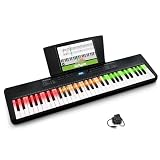
Alesis Teacher's Choice 61-Key Piano Keyboard with Light-up Keys
- Interactive Learning System - Electric keyboard piano featuring 61 keys with smart LED technology that light up in red, green and amber to guide you to the correct notes in real time when using the Skoove app; intuitive and fun for beginners
- Stay Inspired - Features 300 built-in sounds including pianos, strings, brass, guitars, and synths, plus 300 accompaniment rhythms and 30 demo songs with Layer and Split Modes for creative playing
- Everything You Need to Get Started - Includes 3-month Skoove Premium subscription, sheet music/tablet rest, USB-C cable, and power adapter for immediate setup and practice
- Feature Packed - Including a built-in metronome adjustable from 40-280 BPM, easy transpose feature, and a simple recorder feature for recording your own songs to listen back during practice sessions
- Versatile Connectivity - Equipped with 1/8-inch headphone output for silent practice, 1/8-inch aux input for playing along with external devices, USB-MIDI output for computer connection, and 1/4-inch sustain pedal input
Bestseller No. 7

KUMENG Digital Piano 88 Key Weighted Keyboard Full-Size Desk Electric Piano
- 【88-Key Weighted Keyboard】The keyboard piano is an 88-key Full-Size,Weighted Keys. piano keyboard that is perfect for players that are still developing their touch. Instantly convert from a full-size 88-key hammer action digital piano to a spacious work desk – perfect for home offices, dorm rooms, or apartment
- 【High-Quality Sound】This electric piano is equipped with a sophisticated chip that accurately simulates the sound of a real piano. With 800 tones and 128 polyphonies, this electronic piano caters to your diverse playing styles, making every performance a masterpiece
- 【Multi-Functional Panel】This keyboard piano comes with multi-function panel that realizes various functional transformations,such as tone selection, sound recording control, double keyboard split function to help beginners learn more easily, but also clearly displays functions ,so you can easily track your progress
- 【Rich Connectivity Options】With USB/MIDI connectivity, this electric keyboard piano seamlessly integrates with your computer and favorite devices for unlimited possibilities. The MIDI interface unlocks your creative potential, and the USB support allows for MP3 playback
- 【Aesthetic & Compact】Beauty meets convenience, unleashing your musical masterpiece. Immerse yourself in the world of music with the exquisite acoustic digital piano, Designed with portable legs, a high-quality wooden cabinet with a flip key cover to protect the key, which can be seamlessly integrated into your home decor
SaleBestseller No. 8 −5%

Folding Keyboard Piano, Rhymo Upgraded 88 Key Full Size Portable Semi Weighted Electric Piano Keyboard with 30W Stereo Surround Speaker, USB MIDI, Sustain Pedal for Beginners & Adults (Black)
- 【Upgraded Premium Sound & 88 Full-Size Semi-Weighted Keys】FP88S digital Piano uses high-density 3–4 key sampling (vs 5–7 keys on entry models) for richer, authentic grand piano tones. Built-in 30W stereo surround speaker delivers an immersive sound field. 88 full-size semi-weighted keys provide gentle resistance, allowing you to build finger strength while enjoying expressive dynamics. Touch-sensitive response lets you control volume and tone with every key press for a real piano playing feel. Ideal for beginners and developing players.
- 【Bluetooth & MIDI Connection】Built-in features—132 TIMBERS, 128 RHYTHMS, and 80 DEMO SONGS—offering a rich sound library to enhance your learning, practice, and songwriting. Built-in Bluetooth allows seamless wireless connection to Perfect Piano and Popular Piano, making practice more enjoyable and interactive. The MIDI/USB‑B interface enables easy connection to computers, iPads, and other smart devices for smooth music editing and personal composition.
- 【Foldable & Ultra-Portable Design】FP88S 88-key foldable piano features one-button 180° folding for ultra-compact storage and effortless portability. FP88S digital piano folds to half its size (24.7 x 9.6 x 5.9 in, 11 lbs), it's the ideal companion for travel, small apartments. Comes with a padded carry bag—ideal for lessons, travel, school, daily practice and home use.
- 【Dual Power Supply & 10H Long-Lasting Battery】Rechargeable lithium battery supports cordless play up to 10 hours or wired power use, while the battery indicator ensures you never run out of power. Stay powered for practice, outdoor performance, school use and travel without interruptions.
- 【Complete Set, NO ADDITIONAl Purchases Required】Rhymo portable keyboard piano accessory bundle includes key stickers, a cleaning cloth, music stand, adapter, in-ear headphones, music stand, sustain pedal, piano bag, and instruction manual. From small accessories to major components, everything is included for immediate use right out of the box.
SaleBestseller No. 9 −16%

MUSTAR Keyboard Piano, 61 Key Electric Piano Keyboard with Light-Up Keys
- 【61-Key Light-Up Keyboard Piano】This electronic keyboard piano features light-up keys that guide your fingers like a personal teacher, making it ideal for beginners. The piano keyboard for beginners simplifies learning with its intuitive design and interactive light guidance system.
- 【Crystal-Clear Sound & Advanced Features】Powered by a next-generation sound chip,2 built-in stereo speakers, this electric keyboard piano delivers rich, vibrant tones with 255 voices, 255 rhythms, and 50 demo songs.2 built-in stereo speakers. Enjoy features like recording, rhythm programming, and dual-keyboard play for endless musical exploration.
- 【Smart 3-Step Learning System】 The piano keyboard for beginners offers a 3-step learning method: Single Key, Follow, and Ensemble modes. Save your progress with 4 memory settings (M1-M4) and track your improvement over time. Perfect for beginners and aspiring musicians!
- 【Connect & Share the Joy of Music】This Master electric piano comes with audio input/output, headphone jacks, and microphone connectivity, this electric keyboard lets you play privately or share your music with others. The split-tone feature even allows two players to perform together, making it perfect for duets and family fun.
- 【Complete Beginner Kit】This 61 key keyboard comes with everything you need to start playing: a microphone, headphones, a piano stool, a keyboard stand,a music stand, and keyboard stickers. The lighted-up keyboard piano body size: 32.8 x 10.4 x 3.4 inches, adjustable stand height from 25.4-30.1 inches.The 3-level adjustable keyboard stand ensures a comfortable playing height for all ages.
Bestseller No. 10

MUSTAR Piano Keyboard, 61 Key Learning Keyboard Piano with Lighted Up Keys
- Learning Piano Keyboard - MUSTAR 61 key keyboard piano is specially designed with lighted up function and intelligent 3 Teaching Modes. One key mode, Follow mode, and Ensemble mode, beneficial for beginners to get started quickly and improve their performance ability. Best choices of Birthday Christmas Gifts for kids, friends and family.
- Adopted DREAM Source - MUSTAR learning piano keyboard features with 65 demo songs, 600 tones, 500 present rhythms and 2 built-in stereo speakers to give you an authentic piano experience. Adopted DREAM source and sustain pedal make the sound quality more realistic and rich.
- Device Connections - With USB MIDI, electric piano keyboard can be connected with smartphone/computer to download APP for more convenient teaching or playing, It also features a performance-ready joystick for real-time control. This music keyboard piano allows for play of single-fingered and fingered auto-bass chords, with the capacity to select chord timbre, program/edit rhythm, as well as utilize effects such as transpose, tune, vibrato, sustain & ensemble.
- Dual Voice Mode - Allows combine two Voices together, for eg, piano and drum, MUSTAR piano keyboard will offer a rich playing experience. Double keyboard mode will split the keyboard into two parts which allows you to play different instrument sounds or timber degrees at once.
- MUSTAR learning keyboard is newly designed with two power supply methods (adapter and battery power), whether you are practicing at home or partying outdoors, you can play the piano anytime, anywhere. Super value piano kit includes light weight keyboard, music rest, sustain pedal, piano stand, headphone, microphone, power adapter and USB OTG cables.
BUYING GUIDE
If you love playing the piano and want to carry that joy everywhere you go, a flexible piano keyboard is the perfect portable and compact solution. Choosing the right one can seem a bit confusing with all the choices out there. Here is a guide to help you select the best flexible piano keyboard:
1. Number of Keys: Flexible piano keyboards come in various sizes ranging from 32 to 88 keys. For beginners and casual players, a 49 or 61-key keyboard can be more than adequate. However, advanced players might prefer a full 88-key layout to recreate the range of a full-sized piano.
2. Key Sensitivity: While most flexible keyboards may not offer the same level of sensitivity as regular keyboards, some do provide touch-sensitive keys. This allows the volume of the notes to be controlled by how hard the keys are pressed, adding a level of expressiveness to your playing.
3. Sound Quality: Consider the sound quality of the keyboard. This will be determined by the built-in speaker quality and the quality of the sound samples used.
4. Built-in Features: Look for additional features such as built-in metronomes, recording capabilities, and teaching functions. Some flexible keyboards also come with various instrument sounds and rhythm patterns to enhance your playing experience.
5. Connectivity: Check for MIDI/USB connectivity which allows you to connect the keyboard to a computer or other devices. This can be useful for recording your performances or using music software.
6. Power Options: Some models are battery-powered, while others can be charged via USB. Depending on where and how you plan to use the keyboard, one might be more convenient than the other.
7. Durability: The keyboard should be durable and waterproof, especially since one of the advantages of a flexible keyboard is its portability.
8. Price: Flexible keyboards are generally quite affordable, but prices can vary depending on the number of features and the overall quality of the instrument. Determine your budget and select a model that offers the best balance of cost and features.
9. Brand and Reviews: Buy from a reputable brand and read through reviews before making your purchase. This can give you a good idea of the product’s reliability and performance.
By considering these factors, you can find a flexible piano keyboard that is portable, fun, and perfectly tailored to your needs. Happy playing!