TOP PICKS
SaleBestseller No. 1 −25%

20x50 High Powered Binoculars for Adults, Waterproof Compact Binoculars with Low Light Vision for Bird Watching Hunting Camping Travel Cruise Hiking Sports Stargazing, Christmas Birthday Gifts for Men
- UPGRADED HIGH-POWER BINOCULARS - These premium binoculars feature a high-magnification 20x zoom eyepiece and offer a 168-yard field of view at 1000 yards. This allows you to observe and focus on intricate details of distant targets up to 1000 yards away, delivering exceptionally broad and clear long-distance vision. Ideal for adults engaged in bird watching, hunting, camping, climbing, hiking, safari, travel, opera, concerts, sports events, and stargazing. They are essential gear for camping, hunting, travel, and cruises.
- OPTIMIZED EYEPIECE DESIGN - The 26mm eyepiece is ergonomically designed to comfortably fit the eye structure of users, providing a wider and clearer field of view for birdwatching and other outdoor activities. The large eyepiece design helps maintain visual stability, reducing the risk of dizziness and eye fatigue during prolonged use. These binoculars make an ideal gift for men, dads, Father’s Day, Christmas, and birthdays.
- SUPERIOR IMAGE CLARITY - Multilayer-coated aspherical lens elements ensure superior light transmission with minimal distortion, enhancing image brightness, contrast, and overall quality. The BAK4 Porro prism, with its high refractive index, achieves 99.8% light transmission for improved color accuracy. The green FMC (Full Multi-Coating) anti-reflective coating on the objective lens reduces reflected light, further boosting light transmission, image brightness, and sharpness for an exceptional viewing experience.
- EASY AND PRECISE FOCUSING - These binoculars are designed for effortless operation: simply adjust the barrels to align with your eyes, then rotate the sensitive, non-slip center focus wheel with one finger to achieve a sharp, single image without double vision. The focus wheel is covered with soft rubber for comfortable, long-term use without finger fatigue.
- RUGGED AND WATERPROOF CONSTRUCTION - The binoculars feature a daily waterproof body with a rubber coating that provides impact resistance and a firm, comfortable grip. Built with high-quality materials, they are suitable for various outdoor conditions, including harsh environments (note: please do not immerse the binoculars in water). The unique non-slip ergonomic handles on both sides are made of eco-friendly rubber with a textured surface, ensuring a secure and comfortable hold that prevents slipping.
Bestseller No. 2

20x70 Binoculars for Adults High Powered Bird Watching Hunting Travel
- 【20X Magnification Focus Details】Binoculars for adults feature a high magnification of 20x, experience unparalleled clarity and details. The 26mm large eyepiece provides a larger image, sees more comprehensively, and allows you to focus on distant details effortlessly, specially designed for any outdoor explorer. 20x70 binoculars package size: 9.69x8.74x3.27inch, weight is about 2.8 lbs.
- 【70MM Objective Lens with Bright Vision】High power binoculars are equipped with a 70mm large objective lens to ensure maximum light transmittance, providing bright and clear images even in low-light conditions, enhancing your outdoor experience.
- 【HD Optics Improve Image Quality】Binoculars for bird watching Equipped with high-quality BAK4 prisms and fully multi-coated (FMC) optics, these binoculars provide excellent image quality with realistic color reproduction and clarity. At the same time, prevent glare and protect your eyes.
- 【User-friendly Design】The smooth and precise focusing mechanism allows you to adjust the focus quickly and easily, ensuring that you never miss a moment, whether you are observing birds or enjoying the scenery. The rubber-coated body is impact-resistant and comfortable to grip, not easy to slip, and comes with a neck strap for outdoor carrying.
- 【Suitable for Any Scene】Whether you are an avid bird watcher, hunter, hiker, or traveler, WOZEL sports binoculars are designed to perform in a variety of environments, suitable for bird watching, stargazing, hunting, sporting events, sightseeing, hiking, mountaineering, etc. It is also an ideal gift for family and friends.
Bestseller No. 3

Vortex Crossfire HD 10x42 Binoculars | HD Optics, Tripod Adaptable, Waterproof, Fogproof, Shockproof, Included GlassPak Harness - Unlimited, Unconditional Warranty
- 10x magnification & 42mm objective lenses, these Crossfire HD binos are optimized with select glass elements to deliver exceptional resolution, cut chromatic aberration and provide outstanding color fidelity, edge-to-edge sharpness and light transmission.
- Fully multi-coated lenses increase light transmission with multiple anti-reflective coatings on all air-to-glass surfaces. Roof prism design is valued for greater durability and a more compact size.
- Adjustable eyecups twist up and down for comfortable viewing with or without eyeglasses. Center focus wheel adjusts the focus of both binocular barrels at the same time. Diopter (located on right eyepiece) adjusts for differences in a user's eyes.
- Rubber armor provides a secure, non-slip grip, and durable external protection. Binoculars are tripod adaptable allowing use on a tripod or car window mount.
- Nitrogen purging and o-ring seals provide water and fogproof performance in all environments. Rugged construction withstands recoil and impact.
SaleBestseller No. 4 −14%

Celestron SkyMaster 25x70 Binoculars for Astronomy, Long-Range & Wildlife
- POWERFUL 25X MAGNIFICATION: Giant astronomy binoculars with massive 70mm objective lenses and 25x power. Pair them with any tripod for long-distance land-based viewing or astronomical observation.
- WORKS WITH YOUR TRIPOD: Due to their size/weight and high magnification, most users mount SkyMaster binoculars on a traditional photo tripod (not included). The built-in ¼”-20 adapter attaches to most tripods in seconds.
- BRIGHT, SHARP VIEWS WITH BaK-4 PRISMS: The SkyMaster is a favorite among those who view in dim conditions near dawn and dusk or at night for astronomy. BaK-4 prisms maximize light throughput to your eye so you see brighter, more detailed images.
- DURABLE AND WATER-RESISTANT: A rubber-armored housing protects your binoculars from damage and provides a secure gripping surface. The water-resistant exterior stands up to tough conditions and unexpected rainy weather.
- UNBEATABLE WARRANTY & CUSTOMER SUPPORT: Buy with confidence from Celestron, a leading optics brand in California since 1960. Your purchase includes a Celestron Limited Lifetime US Warranty & US-based expert tech support.
Bestseller No. 5
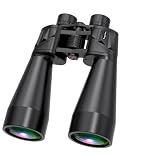
Sogries 18x70 High Power Binoculars for Adults Professional Long Range
- 【Professional High Powered Optics】Experience the pinnacle of optical engineering with our 18x70 high power binoculars for adults. Featuring a massive 70mm large aperture, these optics act as a "light magnet," delivering 150% more brightness than standard 42mm models. Perfect for heavy-duty use where maximum clarity and light transmission are required.
- 【Ultimate Stargazing & Astronomy】As specialized astronomy binoculars, the 18x magnification provides a steady viewing experience compared to shaky high-zoom models. Capturing crisp details of moon craters and star clusters, it’s the top choice for stargazing enthusiasts who demand professional-grade performance in low-light conditions.
- 【Unmatched Long Range Observation】Engineered as powerful binoculars long range, this 18x70 system brings distant horizons to your front row. Whether you are monitoring coastal ship traffic or spotting wildlife, these long range binoculars offer an ultra-wide field of view to track fast-moving objects with absolute precision.
- 【Premium Build for Serious Enthusiasts】Constructed with an aircraft-grade aluminum chassis and premium BAK4 Porro prisms, these high power binoculars are built for durability and superior 3D depth perception. The Fully Multi-Coated (FMC) lenses ensure high-definition visuals, making them the most reliable tool for your professional outdoor adventures.
- 【Eyeglass Friendly & Tripod Ready】Designed for maximum comfort, our binoculars for adults feature a long eye relief, ensuring a full field of view even for eyeglass wearers. To achieve a vibration-free experience during extended long range sessions, these binoculars are tripod adaptable (Adapter and tripod sold separately).
SaleBestseller No. 6 −48%

Sogries 15-35x70mm High Powered Binoculars for Adults Star Gazing Astronomy
- 【Expert-Level Magnification】Experience the pinnacle of optical engineering with our high power binoculars. Featuring a smooth 15-35x zoom, these are the ultimate long range binoculars for identifying distant ships, mountain hikers, or celestial bodies that standard 10x models simply cannot reach.
- 【Ultimate Visual Range】Engineered as powerful binoculars long range, the 70mm ultra-large objective lenses act as a light magnet. This provides a viewing experience that defines high powered performance, ensuring crisp, bright images even during the "blue hour" of dawn or the deep darkness of a starry night.
- 【Designed for the Serious Enthusiast】The most sophisticated binoculars for adults high powered users. We’ve combined a rugged aircraft-grade aluminum chassis with a 20.3mm long eye relief, making these the most comfortable binoculars for adults who wear glasses and demand professional-grade durability.
- 【Precision and Stability】When using high power binoculars at 15-35x 70mm zoom magnification, stability is everything. Our design includes a dedicated tripod adapter to eliminate hand-shake, turning your device into a stationary observation post for powerful binoculars long range viewing from your balcony or deck.
- 【Unmatched Optical Depth】While other binoculars for adults use cheap mirrors, we utilize premium BAK4 Porro prisms and FMC multi-coated lenses. This guarantees 3D depth perception and edge-to-edge clarity, making these the only long range binoculars you will ever need for professional astronomy and maritime use.
SaleBestseller No. 7 −18%

Celestron SkyMaster 15-35x70 Binoculars with Zoom for Long-Range Viewing
- POWERFUL 15-35X ZOOM BINOCULAR: Giant binoculars with massive 70mm objective lenses and powerful adjustable zoom for 15 to 35x magnification. Pair with any tripod for long-distance land-based viewing or astronomy.
- WORKS WITH YOUR TRIPOD: Due to their size & weight, most users mount SkyMaster binoculars on a traditional photo tripod (not included). The included ¼”-20 adapter attaches to most tripods in seconds.
- BRIGHT, SHARP VIEWS WITH BaK-4 PRISMS: The SkyMaster is a favorite among those who view in dim conditions near dawn and dusk or at night for astronomy. BaK-4 prisms maximize light throughput to your eye so you see brighter, more detailed images.
- DURABLE AND WATER-RESISTANT: A rubber-armored housing protects your binoculars from damage and provides a secure gripping surface. The water-resistant exterior stands up to tough conditions and unexpected rainy weather.
- UNBEATABLE WARRANTY & CUSTOMER SUPPORT: Buy with confidence from Celestron, a leading optics brand in California since 1960. Your purchase includes a Celestron Limited Lifetime US Warranty & US-based expert tech support.
SaleBestseller No. 8 −44%

10-30x50 Zoom Binoculars for Adults High Powered
- High Power Zoom Binoculars--Professional 10-30x50 zoom binoculars with a 50mm big eyepiece and 10-30X magnification let you focus on the target for excellent details from 235 feet or 1000 yards away. the powerful binoculars provide a bright, sharp, and vibrant image with more true-to-life details, making them ideal for driving, and wildlife and scenic viewing. It works well for large-scale theatre productions, concerts, football games, etc.
- HD & High-Contrast Images--The BAK-4 prisms and FMC multi-coated broadband green film in these bird watching binoculars produce crisp images, accomplish correct colour reproduction, and have a light transmittance of up to 99.5%. These features also help to prevent glare and protect our eyes. The zoom binoculars offer brighter eyesight in low-light situations like twilight but not for completely black nights. Clear low-light vision.
- Weight Reminder--the binoculars design requires a metal barrel to ensure stability, and it is recommended to use a tripod (not portable). Additional purchase: B0D9TK1D64.
- Waterproof & Comfortable Grip--powerful zoom binoculars have an unscented rubber armour coating, a non-slip fingerprint construction, and a safe and comfortable grip surface. O-ring sealed lenses with anti-fog coating keep moisture, dust, and other debris out of the binoculars' interior, making them waterproof, shock-resistant, long-lasting, and easy to hold.
- Binoculars for Adults --The eye distance of the ridge-designed binoculars can be adjusted to fit most adults, depending on their size. Your fingers can easily concentrate from 10X to 30X using the smooth zoom joystick, meeting all of your observational demands. Eyecups that can be adjusted up and down allow for ideal vision with or without glasses. The binoculars' folding feature makes them simple to focus for a crisp image and simple to use.
SaleBestseller No. 9 −14%

Celestron SkyMaster 20x80 Binoculars for Deep-Sky Astronomy - 80mm Aperture
- POWERFUL 20X MAGNIFICATION: Giant astronomy binoculars with massive 80mm objective lenses and 20x power. Pair them with any tripod for long-distance land-based viewing or astronomical observation.
- WORKS WITH YOUR TRIPOD: Due to their size & weight, most users mount SkyMaster binoculars on a traditional photo tripod (not included). The built-in ¼”-20 adapter attaches to most tripods in seconds.
- BRIGHT, SHARP VIEWS WITH BaK-4 PRISMS: The SkyMaster is a favorite among those who view in dim conditions near dawn and dusk or at night for astronomy. BaK-4 prisms maximize light throughput to your eye so you see brighter, more detailed images.
- DURABLE AND WATER-RESISTANT: A rubber-armored housing protects your binoculars from damage and provides a secure gripping surface. The water-resistant exterior stands up to tough conditions and unexpected rainy weather.
- UNBEATABLE WARRANTY & CUSTOMER SUPPORT: Buy with confidence from Celestron, a leading optics brand in California since 1960. Your purchase includes a Celestron Limited Lifetime US Warranty & US-based expert tech support.
BUYING GUIDES
Long-range binoculars are a critical tool for numerous outdoor activities, from birdwatching and wildlife observation to stargazing and landscape appreciation. They allow users to observe objects and details that are far away with greater clarity. Here’s a guide to help you choose the best long-range binoculars for your needs:
1. Magnification Power: In the world of binoculars, the magnification power (the first number in the specification, e.g., 10×50) is the key to long-range viewing. It refers to how much closer the subject will appear compared to viewing it with the naked eye. For long-range viewing, a magnification power of 10x or higher is generally recommended.
2. Objective Lens Diameter: The second number in the binocular specification (e.g., 10×50) refers to the diameter of the objective lenses (the lenses furthest from your eyes). Larger objective lenses allow more light into the binoculars, resulting in a brighter and clearer image, especially in low-light conditions.
3. Quality of Glass and Lens Coatings: The quality of the optics, including the glass and any lens coatings, is crucial for clarity and brightness. Look for binoculars with multi-coated or fully multi-coated lenses to reduce reflection and enhance light transmission. High-quality glass elements like ED (Extra-low Dispersion) glass can reduce chromatic aberration and provide clearer, sharper images.
4. Field of View: The field of view (usually stated in degrees or as a width at a specific distance) determines the area you can see through the binoculars. A wider field of view makes it easier to locate and track moving objects, but it often decreases as magnification increases.
5. Exit Pupil and Eye Relief: The exit pupil (the diameter of the light visible through the eyepiece) should be larger or equal to the pupil of your eye for the brightest image. Eye relief (the distance you can hold the binoculars away from your eyes while still seeing the entire field of view) is important if you wear glasses.
6. Prism Type: Most binoculars use either Porro or roof prisms to correct the image orientation. Roof prisms make for more compact and durable binoculars, but Porro prism binoculars are usually cheaper and can provide a more “3D” image.
7. Size and Weight: Higher magnification and larger objective lenses often result in larger, heavier binoculars. If you’ll be carrying them for extended periods, consider the trade-off between power and portability.
8. Waterproof and Fogproof: If you’ll be using your binoculars outdoors, look for waterproof and fogproof features. These protect your binoculars from the elements and prevent fogging, which can obscure your view.
9. Durability: Look for rugged construction that can withstand the rigors of outdoor use. Rubberized or armored coatings can provide shock resistance and ensure a good grip.
10. Price and Warranty: Higher magnification and better optics usually mean a higher price. Decide on a budget that balances your needs and wants, and always check the warranty to understand what protections are offered.
11. Reviews: Always check user reviews to get real-life feedback on the binoculars’ performance.
Remember, the best long-range binoculars for you will depend on your specific needs, preferences, and budget. Happy viewing!