"Amazon, Amazon Prime, the Amazon logo and Amazon Prime logo are trademarks of Amazon.com, Inc. or its affiliates". Advertising Disclosure
BestChoice.guide ratings are based on a multitude of verified customer feedback and our attention is solely on products that we truly value. If you choose to click on the links to the products we mention, we could receive an affiliate commission, but this will not cause you any additional costs.
TRI-FUEL FLEXIBILITY FOR ANY SITUATION: Run on gasoline, liquid propane, or natural gas with a simple dial turn, delivering 9,500 running watts and 12,500 starting watts to power home backup, job sites, or RV setups
STABLE POWER WITH AUTOMATIC VOLTAGE REGULATION: Built-in AVR continuously stabilizes output voltage, protecting connected equipment from fluctuations and enabling reliable operation of motor-driven tools, pumps, and appliances
12,500 STARTING WATTS FOR HIGH-SURGE LOADS: The 500cc Generac OHV engine delivers 12,500 starting watts on gas — 32% more surge capacity than running output — handling simultaneous starts of air conditioners, sump pumps, and power tools
COSENSE TECHNOLOGY WITH ELECTRIC START: Onboard COsense automatically detects rising carbon monoxide levels and shuts the generator down before reaching dangerous thresholds; push-button electric start with included 12V battery eliminates pull-cord effort
EXTENDED RUNTIME WITH 7.5-GALLON FUEL TANK: Run up to 9.5 hours at 50% load on gasoline, 14 hours at 25% load, or connect to a natural gas line for virtually unlimited runtime; onboard fuel gauge lets you monitor levels at a glance
RUNS ON GAS, LIQUID PROPANE, OR NATURAL GAS: A single dial switches fuel sources without shutting the unit down; propane delivers 8,550 running watts and natural gas delivers 7,000 running watts when gasoline is unavailable. Powers refrigerator, sump pump, HVAC blower, lights, and power tools simultaneously during an outage
ELECTRIC START WITH RECOIL BACKUP AND BATTERY INCLUDED: Rocker-switch electric start eliminates pull-cord effort for routine startups; a recoil backup is built in for situations where the battery is unavailable, and the 12V 9Ah battery ships in the box
COSENSE TECHNOLOGY DETECTS AND RESPONDS TO CARBON MONOXIDE: Continuously monitors CO levels, triggers an audible alert, and shuts the generator down automatically before dangerous concentrations build — protecting people inside and around the unit
UP TO 14 HOURS OF RUNTIME ON A 7.5-GALLON TANK: Runs up to 14 hours at 25% load or 10.5 hours at 50% load on gasoline; a propane-connected 20-pound LP tank delivers up to 6 hours at 25% load with a built-in fuel gauge to monitor levels
Powered by a heavy duty 550cc 4-Stroke OHV Westinghouse Engine constructed with a durable cast iron sleeve; Runs for up to 19 hours on a 9.5 gal. fuel tank with built-in fuel gauge; up to 7 hours on a 20 lb. propane tank
Engineered with low THD, so it's safe for sensitive electronics. Power phones, computers, TVs and more. Stay connected with people, news and entertainment during power outages, or on jobsites and campsites. Durable copper windings help your generator produce cleaner power, run cooler and last longer
All Westinghouse portable generators are gunctionally tested in the factory and may contain minimum residual oil and/or fuel odor; EPA compliant; Backed by 3-Year limited service, labor, and parts coverage and Nationwide Customer Service Network
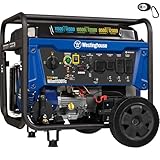
13500 Peak Watts, 10500 Running Watts (Gasoline); 12500 Peak Watts, 9500 Running Watts (Propane); 10000 Peak Watts, 8500 Running Watts (Natural Gas); Remote Start with Included Key Fob, Electric and Recoil Start; Up to 19 Hours of Run Time on a 9.5 Gallon Fuel Tank with Fuel Gauge
Features Two GFCI 120V 5–20R 20A Standard Household Receptacle, One Transfer Switch Ready 120V L14-30R 30A, and One RV Ready 120/240V 14–50R 50A; All Outlets Have Rubber Covers for Added Safety
Powered by a Heavy Duty 500cc Westinghouse 4-Stroke OHV Engine Featuring a Long-Lasting Cast Iron Sleeve with Automatic Low Oil and Carbon Monoxide (CO) Shutdown, and Digital Hour Meter
Plug-and-Play: Comes with a Remote Start Key Fob, 12V Battery Charger, Oil, and Oil Funnel, a Tool Kit, and a User’s Manual to Get You Started Right Out of the Box (Minimal Assembly Required)
All Westinghouse Portable Generators are Functionally Tested in the Factory and May Contain Minimum Residual Oil and/or Fuel Odor; EPA Compliant; Backed By 3-Year Limited Service, Labor, and Parts Coverage and Nationwide Customer Service Network
DUAL FUEL FLEXIBILITY WITH SOURCE SELECTOR - Seamlessly switch between gasoline and liquid propane with a convenient fuel selector dial, eliminating unit shutdown during fuel transitions and providing versatile power options for any emergency or application
EXTENDED 11 HOUR RUNTIME - Dependable 340cc Generac OHV engine with 7.5-gallon steel fuel tank delivers up to 11 hours of continuous runtime at 50% load on gasoline or 6 hours on a 20lb LP tank, with automatic low-oil shutdown to safeguard the engine
LIFE-SAVING COSENSE TECHNOLOGY - Stops, Alerts, and Saves with powerful built-in carbon monoxide detection that continuously monitors CO levels and automatically shuts down the generator when hazardous levels are detected, protecting you and your family
PUSH-BUTTON ELECTRIC START - Convenient rocker switch electric start system provides reliable, hassle-free startup every time, eliminating strenuous manual pull-cord cranking during stressful emergencies or cold weather conditions
RUGGED PORTABLE CONSTRUCTION - Compact steel tube cradle frame with heavy-duty wheels provides superior strength, stability, and easy transportation across any terrain for jobsites, outdoor events, camping, and emergency home backup
12500 Peak Watts, 9500 Running Watts (Gasoline); 11200 Peak Watts, 8500 Running Watts (Propane); 9500 Peak Watts, 7500 Running Watts (Natural Gas); Remote Start with Included Key Fob, Electric and Recoil Start; Up to 12 Hours of Run Time on a 6. 6 Gallon Fuel Tank with Fuel Gauge
Features Two GFCI 120V 5–20R Standard Household Receptacle, One Transfer Switch Ready 120V L14-30R, and One RV Ready 120/240V 14–50R; All Outlets Have Rubber Covers for Added Safety
Powered by a Heavy Duty 457cc Westinghouse 4-Stroke OHV Engine Featuring a Long-Lasting Cast Iron Sleeve with Automatic Low Oil and Carbon Monoxide (CO) Shutdown, and Digital Hour Meter
Plug-and-Play: Comes with a Remote Start Key Fob, 12V Battery Charger, Oil, and Oil Funnel, a Tool Kit, and a User’s Manual to Get You Started Right Out of the Box (Minimal Assembly Required)
All Westinghouse Portable Generators are Functionally Tested in the Factory and May Contain Minimum Residual Oil and/or Fuel Odor; EPA Compliant; Backed By 3-Year Limited Service, Labor, and Parts Coverage and Nationwide Customer Service Network
Tri-Fuel: 12,500/10,000-watt portable generator operates on natural gas, propane, or gasoline, plus natural gas and propane hoses are included so the unit is ready to run on any fuel right out of the box
Electric Start: Power up the 500cc Champion engine with the handy rocker switch, battery included
Intelligauge: Track voltage, frequency, session run time, and total run time to monitor output and track maintenance intervals, plus features CO Shield carbon monoxide auto shutoff system
Powerful: Gasoline: 12,500 starting watts and 10,000 running watts, propane: 11,250 starting watts and 9000 running watts, natural gas: 10,000 starting watts and 8000 running watts and engine oil is included
Champion Support: Includes 3-year limited warranty with FREE lifetime technical support from dedicated experts
POWERFUL STARTING CAPACITY - Generac PowerRush Advanced Technology delivers 40% more starting capacity, allowing the GP3600 to handle heavy electrical loads from power tools, appliances, and essential home equipment during emergencies or job sites
SMART CARBON MONOXIDE PROTECTION - Integrated COsense technology continuously monitors and alerts you to hazardous carbon monoxide levels, automatically shutting down the generator to keep you and your family safe during operation
EXTENDED RUNTIME AND RELIABLE POWER - Long-lasting OHV engine paired with a large-capacity steel fuel tank and built-in fuel gauge provides consistent power output of 3600 running watts and 4500 starting watts for your essential needs
HEAVY-DUTY PORTABLE DESIGN - Rugged 1.25-inch steel tube cradle frame, covered outlet panel for weather protection, and heavy-duty never-flat wheels with fold-down handle make transportation and storage effortless in any environment
AUTOMATIC ENGINE PROTECTION - Hour meter tracks maintenance intervals to keep your generator in peak condition, while low-oil level shutdown automatically safeguards the engine from damage and extends the lifespan of your investment
Powerful Performance: The Generac GP8000E features GFCI outlets (2x 120V 20A duplex & 1x 120V/240V 30A) for reliable power, making it ideal for emergency backup and recreational use with top performance
Convenient Electric Start: Say goodbye to manual cranking. The electric start feature, with the included battery, ensures easy and hassle-free operation, so you're always prepared for unexpected outages
Extended Runtime: The GP8000E boasts a long-lasting OHV engine and a large-capacity steel fuel tank with a built-in fuel gauge. Enjoy up to 12 hours of runtime at 50% load, ensuring you have power when you need it most
Smart and Reliable: Integrated COsense technology provides powerful protection against hazardous carbon monoxide. It can detect and alert you to ensure your safety during operation
Built for Durability: Designed to thrive in rough environments, this generator features covered outlets for added protection, a rugged steel-tube cradle for strength, and heavy-duty, never-flat wheels for easy transportation
Switch between gasoline (14500 surge watts, 11500 running watts), propane (12500 surge watts, 10300 running watts), and natural gas (10500 surge watts, 8750 running watts) with a simple turn of the selection dial
Operates at 120V and 240V, making it perfect for transfer switches and emergency backup
The WEN Watchdog CO Shutdown Sensor helps protect both you and your family by automatically turning off the generator if dangerous levels of carbon monoxide are detected
Electric start powers the 500c 4-stroke OHV engine with the turn of a key, while the 8.2-gallon tank provides up to 12 hours of half-load runtime
Includes four 120V 5-20R outlet, a 120V/240V transfer-switch-ready NEMA L14-30R outlet, a 120V/240V transfer-switch-ready NEMA 14-50R outlet, a 12V DC automotive outlet, a bottle of oil, a 6-foot LPG connection hose, an NG quick-connect adapter, and a three-year limited warranty
Portable generators are invaluable tools for providing power during outages, outdoor activities, or on job sites where electricity is not readily available. Selecting the right portable generator involves understanding its power capabilities, fuel efficiency, and portability to ensure it meets your specific power needs. Whether for emergency power backup, recreational use, or professional applications, choosing the best portable generator can greatly enhance your preparedness and flexibility. This guide will help you navigate the key features to consider when selecting a portable generator that fits your requirements.
Key Features to Consider
Power Output
Wattage: Determine the total wattage you will need by adding up the power requirements of all devices and tools you plan to run simultaneously. Ensure the generator can handle the combined load with some margin to spare.
Starting vs. Running Watts: Some appliances require more power to start up. Check that the generator’s starting (surge) watts can accommodate this initial higher demand.
Fuel Type and Efficiency
Fuel Options: Common fuel types include gasoline, diesel, propane, or dual-fuel options. Consider availability, storage safety, and running costs of each fuel type.
Fuel Efficiency: Look for generators with features like an Eco-mode, which adjusts the engine speed to the load, improving fuel efficiency and reducing noise.
Portability Features
Size and Weight: Choose a generator that is easy to move around. Features like built-in wheels and handles are crucial for enhancing mobility.
Compact Design: Smaller generators are easier to store and transport but may offer less power.
Noise Level
Quiet Operation: Especially important for camping or residential use. Look for generators with noise-reducing features or those rated below 60 decibels.
Durability and Reliability
Build Quality: Durable construction is essential for withstanding harsh environments and frequent use.
Reliability: Opt for brands known for their reliability and excellent customer service. Check user reviews for real-world insights.
Additional Features
Inverter Technology: Inverter generators provide cleaner power which is crucial for sensitive electronics like smartphones, computers, and TVs.
Display and Controls: User-friendly controls and clear display panels make operation easier and allow you to monitor important parameters like fuel level and power output.
Safety Features: Automatic shut-off if oil levels are low, overload protection, and circuit breakers enhance safety and prolong the generator’s life.
Pros and Cons
Pros of Portable Generators
Cons of Portable Generators
✔️ Provides power during outages and in remote locations
❌ Can be expensive, especially higher wattage models with advanced features
✔️ Enhances outdoor and recreational activities with easy power access
❌ Fuel costs and maintenance can add up over time
✔️ Portable design allows for flexibility in use across locations
❌ Noise can be an issue, although newer models are increasingly quieter
✔️ Newer models include safety and eco-friendly features
❌ Heavy models may still be challenging to move for some users
Quick Tips
Assess Your Power Needs: Calculate the wattage requirements of your intended load to ensure you select a generator that can handle your needs without overloading.
Consider the Usage Scenario: Tailor your choice to the primary use case, whether it’s emergency home power, professional use on job sites, or recreational use in quieter settings.
Invest in Quality: A reliable, well-built generator from a reputable brand might cost more upfront but will offer better performance and longevity.
Choosing the right portable generator is a balance of power capacity, fuel efficiency, portability, and noise level. By carefully considering these factors, you can select a portable generator that not only meets your immediate power needs but also provides reliability and convenience in various settings. Whether for home, work, or play, a well-chosen portable generator is a powerful ally in ensuring you have the energy you need, whenever and wherever you need it.